
With Why Invest in Real Assets at the forefront, this paragraph opens a window to an amazing start and intrigue, inviting readers to embark on a storytelling filled with unexpected twists and insights. Real assets offer a unique investment opportunity that goes beyond traditional options, promising stability and growth in a tangible form. Let’s dive into the world of real assets and explore the reasons why they should be a part of your investment strategy.
Reasons to Invest in Real Assets
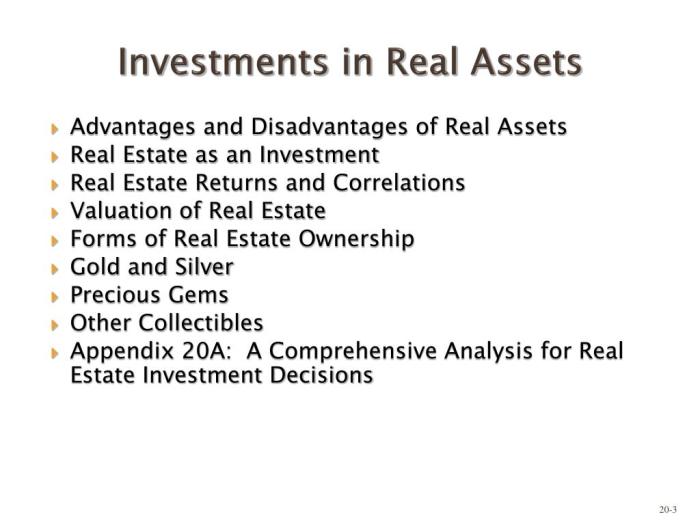
Real assets are physical assets such as real estate, commodities, infrastructure, and stylish furniture that have intrinsic value. Investing in real assets is important as they offer various benefits to an investment portfolio.
Benefits of Investing in Real Assets
- Diversification: Real assets provide a way to diversify an investment portfolio beyond traditional stocks and bonds. This can help reduce overall risk and enhance returns over the long term.
- Inflation Hedging: Real assets like real estate and commodities have historically served as a hedge against inflation. As prices rise, the value of these assets tends to increase as well, preserving purchasing power.
- Potential for Higher Returns: Real assets have the potential to generate higher returns compared to traditional assets. The value of real estate, for example, can appreciate over time, leading to capital gains for investors.
Stability and Tangible Value
Real assets, such as real estate and stylish furniture, can provide stability and tangible value to an investment portfolio. Unlike financial assets that can be impacted by market volatility, real assets offer a physical presence that can withstand economic fluctuations. Additionally, real assets like real estate can generate rental income, further adding to the overall return on investment.
Real Estate Investment
Investing in real estate offers numerous advantages compared to other asset classes. Real estate is a tangible asset that tends to appreciate over time, providing a hedge against inflation. It also offers potential tax benefits, such as deductions for mortgage interest and property taxes. Additionally, real estate investments can generate passive income through rental payments or capital appreciation upon resale.
Types of Real Estate Investments
- Residential Properties: These include single-family homes, condominiums, townhouses, and multi-family properties. Residential real estate can provide steady rental income and long-term appreciation.
- Commercial Properties: This category encompasses office buildings, retail spaces, industrial warehouses, and hotels. Commercial real estate can offer higher rental yields but may require more management involvement.
- Rental Properties: Investing in rental properties involves purchasing residential or commercial units to generate rental income. It can be a reliable source of passive income if managed effectively.
Factors to Consider When Investing in Real Estate
- Location: The location of a property greatly influences its value and rental potential. Factors to consider include proximity to amenities, public transportation, schools, and employment centers.
- Market Trends: Understanding local market trends, such as supply and demand dynamics, rental rates, and property appreciation, is crucial for making informed investment decisions.
- Potential for Renovation: Properties with renovation potential offer opportunities to increase value through improvements. Consider the costs and potential returns of renovations before investing.
Stylish Furniture as Real Assets
Investing in stylish furniture can be a unique way to diversify your portfolio and potentially see appreciation in value over time. High-quality designer pieces, especially those from renowned brands or limited editions, can hold or even increase their value as they age.
Appreciation Potential of Stylish Furniture
- Designer furniture pieces are often crafted with high-quality materials and superior craftsmanship, making them durable and long-lasting.
- Limited edition or iconic furniture designs can become sought-after collector’s items, driving up their value in the secondary market.
- Investing in timeless pieces that have a strong aesthetic appeal can ensure continued demand and appreciation over the years.
Selecting Furniture for Long-Term Value
- Research popular and reputable designer furniture brands known for their quality and innovation.
- Look for pieces that have a unique design or feature, setting them apart from mass-produced furniture items.
- Consider the condition of the furniture, as well-maintained pieces will retain their value better over time.
- Consult with experts or appraisers to identify furniture pieces with the potential for long-term appreciation.
Renovation Tips for Real Estate Investments
Renovations play a crucial role in increasing the value of a real estate investment. By making strategic improvements, property owners can enhance the appeal and value of their assets, ultimately leading to higher rental income or resale value.
Cost-Effective Renovation Strategies
- Focus on the kitchen and bathroom areas, as these are key selling points for tenants and buyers.
- Consider cosmetic upgrades such as fresh paint, new flooring, and updated fixtures to give the property a modern look.
- Improve energy efficiency by installing energy-saving appliances, LED lighting, and better insulation, which can attract eco-conscious tenants and reduce utility costs.
- Enhance curb appeal with landscaping, exterior painting, and minor repairs to create a positive first impression.
Impact of Renovations on Rental Income and Resale Value
- Well-executed renovations can justify higher rental rates, attracting quality tenants willing to pay more for a well-maintained property.
- Increased property value due to renovations can result in higher resale prices, generating greater returns on investment when selling the property.
- Regular maintenance and updates can also help prevent costly repairs in the long run, preserving the property’s value over time.
In conclusion, investing in real assets presents a compelling case for diversification, stability, and potential for high returns. By leveraging real estate and stylish furniture as part of your investment portfolio, you not only secure tangible value but also open doors to new opportunities for growth and financial success. Consider the benefits of real assets carefully and make informed decisions to maximize your investment potential.
FAQ Explained
Why should I consider investing in real assets?
Investing in real assets offers diversification, inflation hedging, and the potential for higher returns compared to traditional investments.
What are some examples of real estate investments?
Real estate investments can include residential properties, commercial properties, or rental properties, each offering unique advantages and considerations.
How can renovations impact the value of a real estate investment?
Renovations play a crucial role in increasing the value of a real estate investment by enhancing the property’s appeal and potential for higher resale value or rental income.


